Aviso/Warning

Se algum link estiver inacessível envie-nos um email ou deixe-nos um comentário/ If by any chance there is a broken link send us an email or leave us a comment.

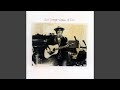
McGuinness Flint - Happy Birthday, Ruthy Baby (LP 1971)

quarta-feira, 9 de março de 2011

AQUI:

McGuinness Flint - Happy Birthday, Ruthy Baby (LP Capitol ST 22794 - 1971). 
Album adquirido na discoteca JMM - Edifício Fonte Azul em Lourenço Marques/Moçambique.

McGuinness Flint - Banda formada em Londres no ano de 1969. O seu estilo de som é uma mistura de rock, folk e psicadelico.

In the early '70s, Capitol had both the Band and McGuinness Flint on their roster, with both bands producing the best work of their careers. Like the Band, McGuinness Flint excelled by ignoring trends in rock music and drawing on styles with deeper roots. Also like the Band, Happy Birthday, Ruthy Baby is a follow-up that often surpasses their exceptional debut album. Where Dylan's former backup band was making the cover of Time magazine, though, McGuinness Flint remained largely unknown outside their native England. Happy Birthday, Ruthy Baby, with solid production by Glynn Johns and the gifted Nicky Hopkins on piano, expands on the rustic tone of the band's first album. The title track is a rousing pub rock tribute to one of the band's supporters, a touching picture of life as a struggling musician. Jazz influences permeate the propulsive "Reader to Writer" and "Fixer," with its stunning trombone solo. "Klondike" is a slice of Americana that could easily pass for a Robbie Robertson composition, and the acoustic "Sparrow" is as moving as any ballad to come out of the '70s. From beginning to end, Happy Birthday, Ruthy Baby is a gem, full of promise for the group. It's unfortunate that the album, and the band, were not more widely appreciated. Principle songwriters Gallagher and Lyle left after this album. Although McGuinness Flint rebounded in style with Lo and Behold, lead singer Dennis Coulson soon started a solo career, and the band folded in 1975.

By James A. Gardner

Track List:
1 Happy Birthday, Ruthy Baby (Gallagher, Lyle)
2 Conversation (Gallagher, Lyle)
3 When I'm Alone With You (McGuinness, Flint)
4 Fixer (Gallagher, Lyle)
5 Faith and Gravy (Gallagher, Lyle)
6 Klondike (Gallagher, Lyle)
7 Reader to Writer (Gallagher, Lyle)
8 Changes (Gallagher, Lyle)
9 Friends of Mine (Gallagher, Lyle)
10 Piper of Dreams (Gallagher, Lyle)
11 Jimmy's Song (Gallagher, Lyle)
12 Sparrow (Gallagher, Lyle)

Members:
Dennis Coulson Guitar, Keyboards, Vocals
Hughie Flint Drums, Vocals
Benny Gallagher Bass, Guitar, Harmonica, Piano, Guitar (Electric), Ocarina, Vocals
Nicky Hopkins Keyboards
Jimmy Jewell Saxophone
Graham Lyle Banjo, Bass, Guitar, Mandolin, Guitar (Electric), Vocals
Tom McGuinness Bass, Guitar, Guitar (Electric), Vocals
John Mumford Trombone


LP gentilmente cedido por Carlos Santos.
Ripado, digitalizado e masterizado do vinil (capas e áudio) por João Romão. 

Mireille Mathieu - Un Homme Et Une Femme (Single 1966)


Mireille Mathieu - Un Homme Et Une Femme (Single Barclay M 926, 1966).

Faixas/Tracks:

A  Un Homme Et Une Femme (F. Lai, P. Barouh)    2:53
B  Viens Dans Ma Rue (A. Pascal, P. Mauriat)   2:30

EP gentilmente cedido por Gilda Carvalho, minha amiga do Canadá. Agradecimento especial pela colaboração. 

Mireille Mathieu - C'Est Ton Nom (EP 1965)


AQUI:

Mireille Mathieu
- C'Est Ton Nom (EP Barclay 70953, 1965).

Faixas/Tracks:

C'Est Ton Nom (Francis Lai - Francoise Dorin) (2:21) *
Ne Parlez Plus (Jil et Jan) (2:49) **
Mon Credo (André Pascal - Paul Mauriat) (2:40) *
Ils S'Embrassaient (Guy Magenta - Serrge Lebrail) (2:49) **

* com Paul Mauriat and his Orchestra.
** - com The Orchestra of François Rauber.

Mireille Mathieu, nascida no Sul de França, é filha de um operário, Roger e da dona-de-casa Marcelle, que enfrentaram grandes dificuldades económicas para criar os seus catorze filhos: Mirielle (a mais velha), Monique, Christiane, Marie-France, Réjane, Régis, Guy, Roger, Jean-Pierre, Rémy, Simone, Philippe, Béatrice e Vincent. A sua família viveu durante anos numa modestíssima casa de madeira.
Mesmo quebrando pedras (literalmente), Roger, seu pai, alimentava o sonho de poder cantar, visto que possuía uma bela voz de tenor. Neste ambiente, Mireille cresceu e herdou o talento musical do pai. Aos quinze anos, quando debutante, Mireille e sua família conseguiram um apartamento e ela pode, finalmente, tomar um banho quente e decente. Segundo ela mesma, esse foi o dia mais feliz da sua vida.
Grande admiradora de Edith Piaf, Mireille cantou em público pela primeira vez aos quatro anos. Um pouco precoce, Mireille cantava na igreja já aos quatro anos e com esta idade cantou na Missa do Galo da Igreja Matriz da sua cidade. Porém, para se tornar uma grande estrela internacional, não bastava apresentar-se para a família e aos amigos, que a apelidaram “ la vie en rose “, por motivos óbvios.
Com uma ascensão meteórica na sua carreira, Mireille participa em programas de televisão nos Estados Unidos e apresenta-se no Olympia, em 1967. O Instituto Francês de Opinião Pública, na época, pesquisou junto ao público e declarou Mireille como a cantora preferida do povo francês.
Depois de se apresentar na TV em 1965, e da sua estreia no “Olympia” em 1966, Mireille já era uma celebridade de domínio público. Foi saudada pela imprensa com grande espalhafato e anunciada como a “próxima Edith Piaf”, pela evidente semelhança de seu timbre de voz com o de Edith, falecida três anos antes.
A sua versão “La dernière valse”, que era um sucesso em inglês do cantor britânico Engelbert Humperdinck – “The Last Waltz”- foi uma ponte segura para tornar Mireille muito popular no Reino Unido.
Com os seus repetidos sucessos foi parar ao Canadá e aos Estados Unidos, onde se apresentou no famoso e indispensável “The Ed Sullivan Show” e no outro dia, 50 milhões de pessoas já conheciam Mireille Mathieu. Cantou em Las Vegas, ao lado de Dean Martin e Frank Sinatra e foi um sucesso quase surpreendente. do público e da crítica.

Fonte: In Wikipedia

 EP gentilmente cedido por Gilda Carvalho, minha amiga do Canadá. Agradecimento especial para ela e um abraço, pela colaboração.

Herbie Mann - Discotheque (LP 1975)


DOWNLOAD LINK:   http://www.megaupload.com/?d=QCK1APUD

Herbie Mann - Discotheque
(LP Atlantic ATC 9577 - 1975). Editado pela TEAL Discos - Lourenço Marques/Moçambique.

Album: 
Producer: Herbie Mann
Personnel:
Herbie Mann - Flutes
Pat Rebillot - Keyboards
Steve Gadd - Drums
Tony Levin - Bass
Jerry Friedman, Hugh McCracken and Bob Mann - Guitars
Ralph MacDonald, Armen Halburien, Ray Barretto and Ray Mantilla - Percussion
Barry Rogers and Sam Burtis - Trombones
Background vocals: Cissy Houston, Sylvia Shemwell and Eunice Peterson
Background voices in Guava Jelly by The PiÒa Colada Choir
Arranged and conducted by Pat Rebillot

Album Tracklisting:
1. Hi-Jack 5:16
2. Pick Up the Pieces 5:16
3. Lady Marmalade 5:15
4. Mediterranean 6:23
5. Can't Turn You Loose 3:20
6. Won't Last A Day Without You 2:50
7. High Above the Andes 6:30
8. Bird of Beauty 4:30
9. Guava jelly 3:20

Herbie Mann was born in Brooklyn, New York to Romanian and Russian parents. He attended Lincoln High School in Brighton Beach, failing a music class there. His first professional performance was playing the Catskills resorts at age 15. In the 1950's, Mann was primarily a bop flutist, playing in combos with artists such as Phil Woods, with occasional forays into bass clarinet, tenor sax and solo flute.

Mann was an early pioneer in the fusing of jazz and world music. He incorporated elements of African music in 1959 following a State Department sponsored tour of the continent, adding a conga player to his band, and the same year recorded Flutista, an album of Afro-Cuban jazz. In 1961 Mann took a tour of Brazil and returned to the United States to record with Brazilian players including Antonio Carlos Jobim and guitarist Baden Powell. These albums helped popularize the bossa nova. Many of his albums throughout his career returned to Brazilian themes. He went on to record reggae in London (in 1974), Middle Eastern (1966 and 1967) (with oud and dumbek), and Eastern European styles. In the mid-1960s Mann hired a young Chick Corea to play in some of his bands. In the late 1970s, early 1980s Mann played duets at New York City's Bottom Line and the Village Gate to sold out crowds with the late Sarod virtuso Vasant Rai.

Following the 1969 hit album Memphis Underground a number of disco-style smooth jazz records in the 1970s, mainly on Atlantic records, brought some criticism from jazz purists but helped Mann remain active during a period of declining interest in jazz. The musicians on these recordings are some of the best-known session players in soul and jazz, including singer Cissy Houston (mother of Whitney Houston), guitarists Duane Allman and Larry Coryell, bassists Donald "Duck" Dunn and Chuck Rainey and drummers Al Jackson and Bernard Purdie, these last from the Muscle Shoals studio in Alabama. In this period Mann had a number of songs cross over to the pop charts — rather rare for a jazz musician. A 1998 interview reported that "At least 25 Herbie Mann albums have made the top 200 pop charts, success denied most of his jazz peers."

Mann provided the music for the 1978 National Film Board of Canada animated short Afterlife, by Ishu Patel.

In the early 1970s he founded his own label, Embryo Records, distributed by Cotillion Records, a division of Atlantic Records. Embroy produced jazz albums, such as Ron Carter's Uptown Conversation (1970); Miroslav Vitous' first solo album, Infinite Search (1969); Phil Woods and his European Rhythm Machine at the Frankfurt Jazz Festival (1971); and Dick Morrissey and Jim Mullen's Up (1976), which featured the Average White Band as a rhythm section; and the 730 Series, with a more rock-oriented style, including Zero Time (1971) by TONTO's Expanding Head Band. He later set up Kokopelli Records after difficulty with established labels. In 1996, Mann collaborated with Stereolab on the song "One Note Samba/Surfboard" for the AIDS-Benefit album Red Hot + Rio produced by the Red Hot Organization. His last appearance was on May 3, 2003 at the New Orleans Jazz and Heritage Festival at age 73.

He died at age 73 on July 1, 2003 after a long battle with prostate cancer.


LP gentilmente cedido por Carlos Santos.
Ripado, digitalizado e masterizado do vinil (capas e áudio) por João Romão. 


Os Espaciais (EP 1967)


Link retirado a pedido da Editora.

Os Espaciais (EP Rapsódia EPF 5.344 - 1967)

Conjunto Académico Os Espaciais, grupo do Porto formado em 1963 e fã dos Beatles, liderado por Guedes Moura (guitarrista e vocalista), que mais tarde veio a integrar o grupo Psico e colaborado também com os Tantra, com o nome de Toni Moura.
Formação: Toni Moura (vocalista e guitarra solo), Vasco Moura (viola baixo), Tony Sampaio (órgão), Artur Lima (bateria) e Manuel Monteiro (viola ritmo).
Moura gostava muito dos Beatles, preferência que se reflectiu na música que compôs e nos arranjos que efectuou para os Espaciais.
Este grupo gravou 4 EPs e durariam com esta designação até Outubro de 1969, altura em que passaram para Psico, mudando também de estilo e de objectivos musicais.
No EP que aqui se apresenta, Os Espaciais acompanham Alberta Monteiro nos temas: Contradição / Não, Não, Não, Não e Meu Ex-Amor.

Notas retiradas dos textos de António Duarte (25 anos de Rock ‘N Portugal) e da Enciclopédia da Música Ligeira Portuguesa (Luís Pinheiro de Almeida).

EP gentilmente cedido por Luís Futre.
Ripado, digitalizado e masterizado do vinil (capas e áudio) por Carlos Santos.

Mário Simões e o Seu Conjunto (10" LP 1955/56)


Mário Simões e o Seu Conjunto ( 10" LP His Master's Voice - DLPC 2 - Edição inglesa/made in UK - 1955/56). Disco considerado muito raro.

Faixas / Tracks:
Fado Lisboa / O Xote das Meninas / Golegã / "O" (OH!) / Sinal da Cruz / Neurasténico / Fado Eugénia da Câmara / Baião de Todos.

O Conjunto de Mário Simões é hoje em dia recordado com venerável afecto, mais do que fazia supor há uns bons anos atrás.
Como outras bandas dessa época em que destacamos o Thilo's Combo, Helder Martins, Shegundo Galarza e Jorge Machado, Mário Simões fica para a história da música ligeira portuguesa como um grande impulsionador e divulgador da boa música dita dançável ou como é catalogada hoje em dia (Easy Listening Português).
Nascido em Lisboa em finais dos anos trinta, aos 17 anos tinha já deixado para trás os estudos agrónomos para seguir os musicais. Primeiro como acordeonista e depois já como líder do seu quarteto em que desempenhava (e muito bem) as funções de pianista. Muito requisitado pelo Casino do Estoril e outras salas de espectáculos, actuou também por diversas vezes na televisão. Foi contratado por algumas temporadas pelos Casinos de Lourenço Marques (actual Maputo) e de Joanesburgo na África do Sul.
Aparece em diversos EP's e singles como acompanhante ou como solista principal. Vários são os êxitos de Mário Simões e o Seu Conjunto: "A Borracha Do Rocha", "Flauzina", "Loucura", "O Lápis do Lopes", "Twist Desconjuntado" com um solo de guitarra que é uma delicia, e outros mais que são sempre um prazer de escutar.

Fonte:  CDGO

LP gentilmente cedido por Luís Futre. Agradecimento também ao sr. Jaime Nascimento que nos ofereceu um exemplar deste LP.
Ripado, digitalizado e masterizado do vinil (capas e áudio) por Carlos Santos. 

Carlos Mendes - Amor Combate (single 1976)

terça-feira, 8 de março de 2011


Carlos Mendes - (Single TLD - Toma Lá Disco TLS 008 - 1976)
Faixas: Amor Combate/Poema Nada

Em 1963, Carlos Mendes foi fundador do famoso conjunto Sheiks, grupo que abandona em 1967 para iniciar uma carreira a solo com uma versão de Penina que Paul McCartney tinha escrito para os Jotta Herre.
Quando Carlos enveredou por uma carreira a solo iria dar, primeiramente origem a dois albuns de originais, em 1976 e 1977, respectivamente “Amor Combate” e “Canções de Ex-cravo e Malviver” repletos de brilhantes momentos musicais de sua autoría, sobre intemporais poemas de Joaquim Pessoa. Dois discos marcantes, considerados dos melhores da década de 70, com orquestrações monumentais do maestro Pedro Osório, numa muito feliz e irrepetivel conjugação de talentos.
Em 1976 funda juntamente com outros autores, entre os quais Paulo de Carvalho e Fernando Tordo, a primeira editora discográfica independente, "Toma Lá Disco". Gravou então o disco "Amor Combate" composto com músicas de sua autoria. O disco foi premiado pela crítica como o Melhor Disco do Ano.

Fonte: Texto parcialmente retirado de Portugal On Line e Wikipedia.

Single gentilmente cedido por Luís Futre.
Ripado, digitalizado e masterizado do vinil (capas e áudio) por Carlos Santos.

Demétrius - Grandes Sucessos


Demétrius - Grandes Sucessos.

Como o título sugere, esta fantástica colectânea reúne alguns dos clássicos e dos sucessos de Demétrius, um dos grandes nomes da música brasileira. São 22 faixas que marcaram época, entre elas, "Encontro", "Só Deus Sabe o Quanto Te Amei", Ei! Meu Pai  ou "O Passo Mais Errado Da Minha Vida", entre muitas outras. 

Faixas/Tracklist:

1 Levante little Suzie [Wake up little Suzie] (B.Brryant, F.Bryant)
2 Ternura [Somehow it to be tomorrow] (K.Karan, E.Levitt)
3 Chorando vou pedir [Suspicion] (D.Pomus, M.Shuman)
4 O durão (Demétrius)
5 Dia chegará (Demétrius)
6 Teu romântico canalha [Tu romantico canalha] (King Clave, Tulio de Rose)
7 Glorinha [Fever] (J.Davenport, E.Cooley)
8 Um dia você vai voltar (Demétrius)
9 O bêbado (Demétrius)
10 Preciso lhe encontrar (Demétrius)
11 Agora eu sei (Demétrius)
12 Nas voltas do Mundo (Cezar, Cirus)
13 Trevo de quatro folhas [I'm looking over a four leaf clover] (Dixon, Woods)
14 Encontro (Demétrius)
15 Sou alguém que te ama (Demétrius)
16 Imenso amor (Renato Corrêa, Wanderleia)
17 Só Deus sabe o quanto te amei (Fontana, C.Roberto)
18 Urso veloz [Running bear] (J.B.Rchardson)
19 Ei! Meu Pai (Demétrius)
20 O casamento (Galahad, Arthur)
21 Sou feliz (Clayton)
22 O passo mais errado da minha vida (Fontana)
 Álbum gentilmente cedido por Miguel Nunes (do Brasil). Agradecimento especial para ele e um abraço, pela boa colaboração.

The Byrds - Mr. Tambourine Man (EP 1965)


The Byrds - Mr. Tambourine Man (EP CBS 6192, 1965).

Mr. Tambourine Man is the debut album by the American folk rock band The Byrds and was released in June 1965 on Columbia Records (see 1965 in music). The album, along with the single of the same name, established the band as an internationally successful rock act and was also influential in originating the musical style known as folk rock. The term "folk rock" was, in fact, first coined by the U.S. music press to describe the band's sound in mid-1965, at around the same time that the "Mr. Tambourine Man" single reached the top of the Billboard chart. The single and album also represented the first effective American challenge to the dominance of The Beatles and the British Invasion during the mid-1960s.

The album peaked at #6 on the Billboard Top LPs chart and reached #7 in the United Kingdom. The Bob Dylan penned "Mr. Tambourine Man" single was released ahead of the album in April 1965, reaching #1 on both the Billboard Hot 100 and the UK Singles Chart. A second single from the album, "All I Really Want to Do", also a Dylan cover, was moderately successful in the U.S. but fared better in the United Kingdom, where it reached the Top 10.


Fonte: Wikipedia

EP gentilmente cedido por Luís Futre.
Ripado do vinil. Digitalização (capas e áudio) e masterização, por Carlos Santos.

Ismail Haron And The Guys (EP 1969)


Ismail Haron And The Guys (EP Parlophone EGEP 667, 1969 /Singapore/Malaysia Malay).


Ismail Haron (full name: Ismail bin Harun) (b. 13 May 1946 in Killiney Road, Singapore) is a Singaporean singer.
Haron is from a big family of 8 boys and 4 girls. He became interested in pop music like everyone else and began to harbour intentions of singing. He said that he had been singing in front of schoolboys since he was 7 or 8, at assembly periods. He was from Queenstown Secondary Technical School.
The first group he joined was Valiants. He was with them for only a few months. Then he teamed up with Vigilantes some of whom were his secondary school classmates, to record their first EP under the Eagle label, with a series of Malay songs adapted from English hits, namely "Senyuman Terakhir" ("Green Green Grass Of Home"), "Pulang Pada-Ku", "Mari Sayang" ("Hang On Sloopy") and "Mari Menari" ("La Bamba"). His 1968 album with The Vigilantes called "Jangan Marah Lili" contained the hit "Enam Belas Lilin" ("Sixteen Candles"), which remained in the Malaysian charts for 15 consecutive weeks. Another EP that he recorded under Panda in the same year contained songs like "Impian Suchi", "Tangisan Hati", "Gadis Peladang" and "Mengusek Mambang".
Ismail was actually the second vocalist for The Vigilantes. The first vocalist for this band was a Singaporean Peranakan singer, Solo Chu, with his only album containing songs "Kau Tinggal-kan Diri-ku", "Jangan Salah Sangka", "Di-Goda Kenangan" and "Harapan Hati Kaseh".
Prior to this, The Vigilantes was an instrumental band with Eagle Records and had managed to record an EP with songs "Till We Meet Again", "I Fell Into A Trance", "Love In Bloom" and "Reminiscence".
Meanwhile, The Vigilantes had decided to change their name to "The Guys" due to changes in the bands' line-up and the style of their music performance. Also, the band and Ismail Haron had secured a contract with the world's recording giant, EMI. In 1968, they began their recording stinct with EMI with an EP containing "Ribin Biru" ("Pretty Ribbon"), "Ku Ta'kan Jatoh Chinta Lagi" ("I'll Never Fall In Love Again"), "Tunggu-lah Puan" ("Keep On Runnin'") and "Delailah" ("Delilah"). As most of his rendition was based from Tom Jones' popular song and that he emulated the singer's way of performance, he was later given the moniker "Singapore's Tom Jones". He said he did not mind but Tom Jones was not his main idol. He said his main inspirations were black singers. He said he was the first to do James Brown songs in Singapore.
A few more EPs ware released in later part of 1968 and early 1969 with more hits like "Sembilan Bulan Ku Nanti-kan", "Kenangan Manis Di-Kuala Lumpur", "Bersedia" ("Get Ready"), "Bebas-kan Daku" ("You Keep Me Hanging On"), "Sudi Sudi-kah Dikau?" ("Gimme Gimme Good Lovin'") and "Ku Tiada Minta Lahir Ka-Dunia" ("The Music Played"). However, the year 1969 witnessed the end of The Guys' recording career and their final work being put up was for another artiste, Eddie Ahmad, with "Khayalan" ("The Fool On The Hill"), "Rintehan", "Chipta'an-Ku" and "Hanya Mimpi".
Ismail Haron also recorded four English songs with The Guys in one EP under EMI - "My Elusive Dreams", "The Rose", "A Minute Of Your Time" and "Hungry For Love".
In 1970, Ismail Haron embarked for a solo career with his first solo EP under EMI titled "Kehilangan Chinta" ("Without Love"). He took a break for a live performance in Hong Kong in the same year for a few months. By this time, he was under the management of Quill Organisation. They decided to form a supergroup and got Roland and Eddie from Guys, saxophone player Andrew Oh from Pink and Purple, John Choo (organ, sax) and Philip Koh (drums) from Blackjacks. They were even spotted by Robert Stigwood who was manager of Bee Gees and ex Cream who wanted to manage and record them and bring them over to the West. They were even offered a gig in Japan which somehow never materialised. Instead they played in Bangkok at Montieth and at Udon Thani further North near the Lao border. Udon was a US base and they were playing in club for US soldiers and officers.
Then they came back to Singapore and continued playing the clubs in 1971 and 1972. The band changed personnel at this time. Various members came and went. Finally the group broke up. Ismail continued to record a few more solo albums - "Ismail Haron & Maria" (1972), "Ilham Pujangga" (1972), "Ismail Haron" (1972), "Antara Pujangga Dan Insan Biasa" (1973), "Sutra Mulia" (1974), "Hulurkan Tangan" (1975) and "Potret Sindiran" (1975). Among his popular hits within these periods were "Dendam-ku Kerana Maria" ("I Did What I Did For Maria"), "Antara Anak Dan Ayah" ("My Boy"), "Tolong Damai-kan" ("Mammy Blue"), "Ilham Pujangga", "Wati", "Persembahan-ku", "Hey Hey Sunny", "Junainah", "Kehilangan Chinta" and "Apa Khabar Sayang" ("Hello Darling").
Between 1972 and 1976, Ismail Haron recorded a few duet songs with diva Anita Sarawak. Songs include "Alam Terpuja" ("You Make Me Feel Brand New"), "Rahsia-Mu Rahsia-Ku" ("Sealed With A Kiss"), "Janji Tetap Janji" ("My Girl"), "Gabus Tarbus" ("House Of Bamboo"), "Asmara", "Rahsia Di-Ayer Jerneh", "Menunggu Nasi Minyak" and "Kesah Dol dan Minah".
He returned to Singapore in June 2003 because he wanted to see his family. Meanwhile, during his stay in his hometown, he continued to perform in hotels and on TV shows, both in the republic and the neighbouring Malaysia; one of which was on the programme "Ogy And Salih" in conjunction with Eidul Fitri celebration. Ismail's comeback concert held at Downtown East, Singapore in December 2008 was well accepted by both young and old. He also recorded his comeback album under Life Records containing a mix of new compositions as well his old 60s recordings originally under EMI plus a brief biography on himself. On 29 March 2009, Ismail Haron and his previous EMI colleague Junainah performed live at the Malaysian Handicraft Centre in Kuala Lumpur, Malaysia.
In an interview with Malaysian daily Utusan Malaysia, Ismail Haron mentioned that he plans to migrate to Kuantan, the east-coast city of peninsular Malaysia, as a permanent resident to continue with his singing career.

Fonte: In Wikipedia.

EP gentilmente cedido por Luís Futre, a quem agradecemos.
Ripado, digitalizado e masterizado do vinil (capas e áudio) por Carlos Santos.